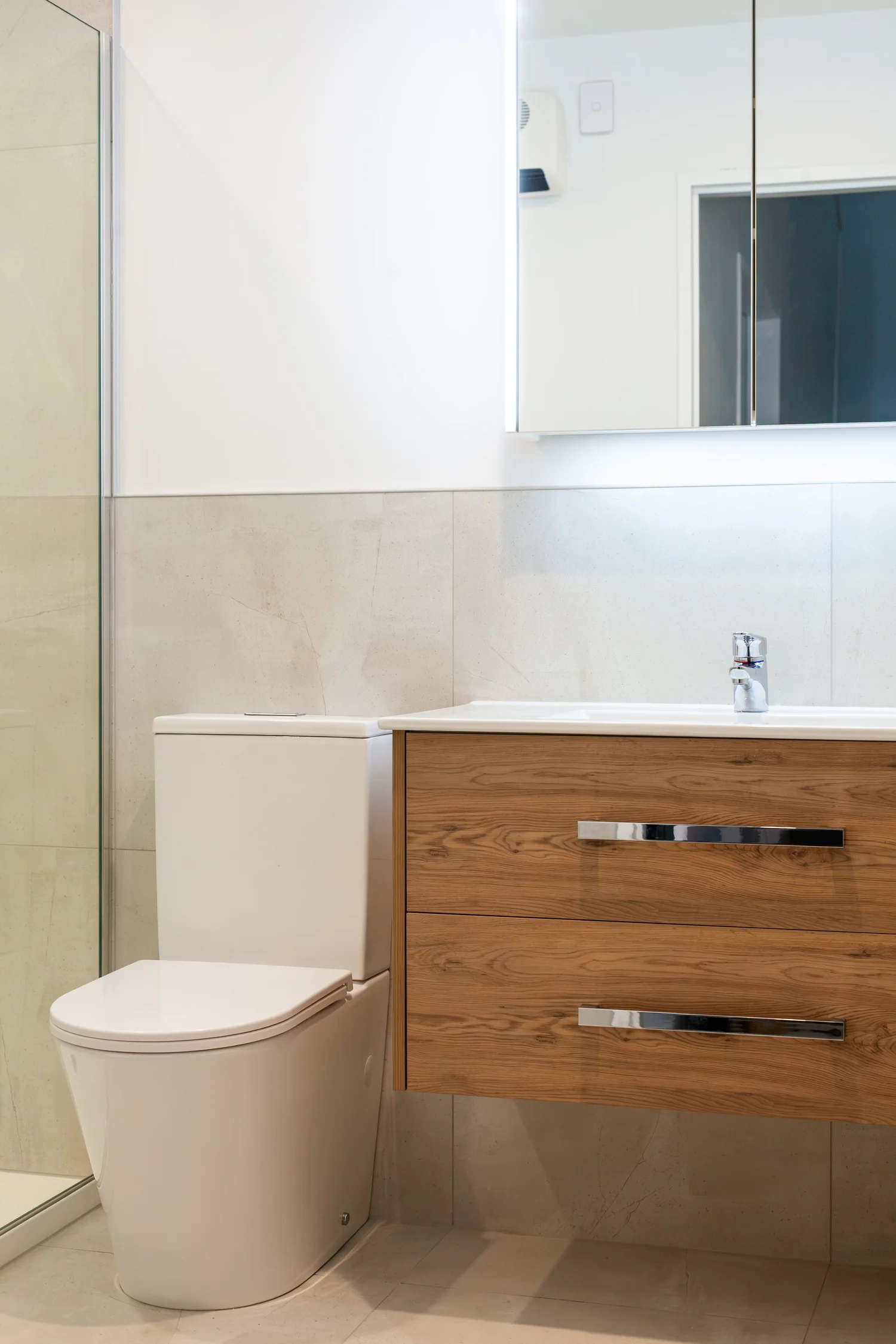
bathroom renovation
cost guide
A clear breakdown of what bathroom renovations cost — what drives the price, and how we keep every job on a fixed-price contract with no surprises.
Average Bathroom Renovation Costs by Tier
Basic
- Existing layout retained
- No tiles — acrylic shower liner
- Low-end hardware & fittings
- Waterproofing to code
Mid-Range
- Minor layout changes
- Full tiling — floor & walls
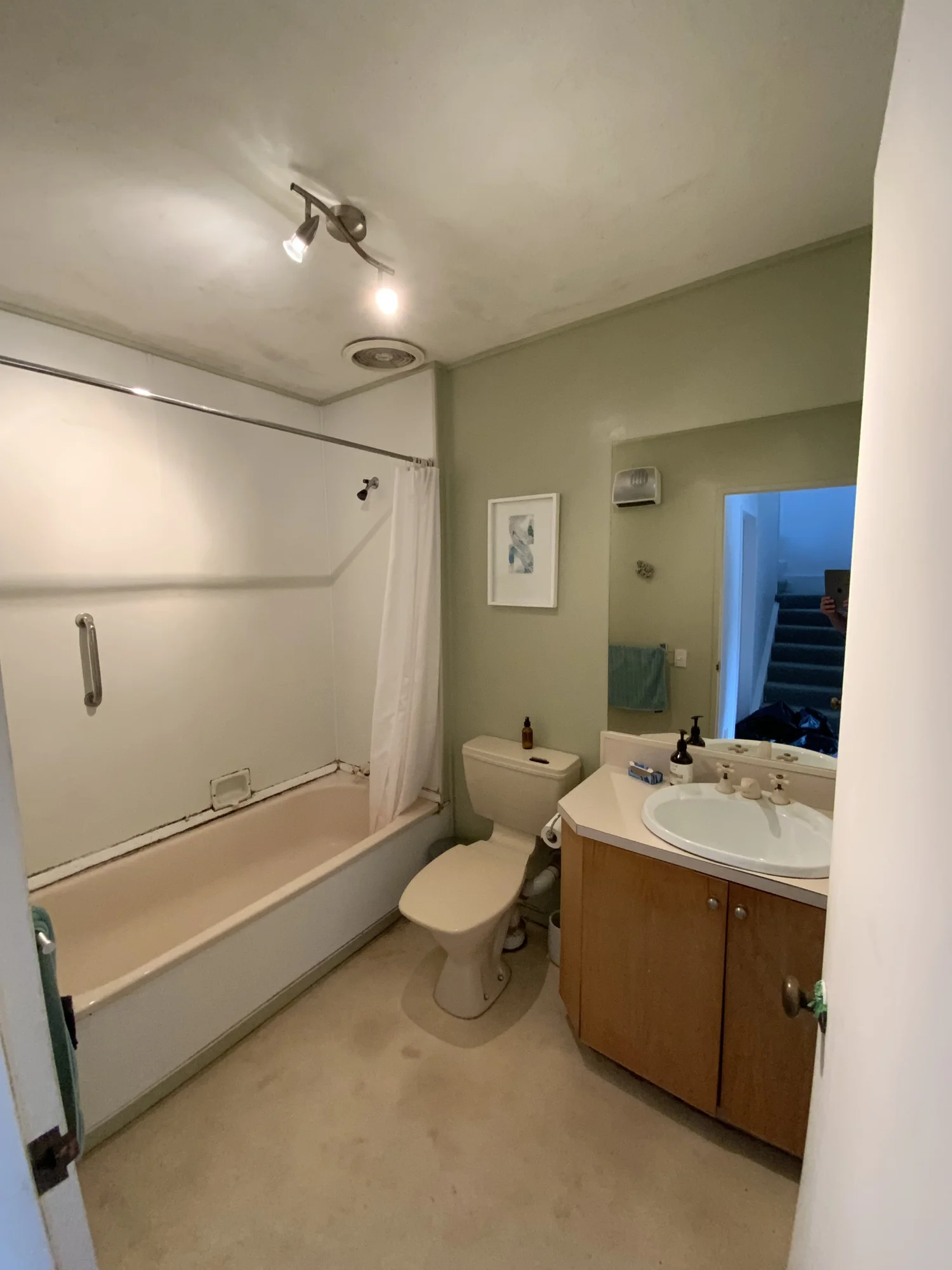
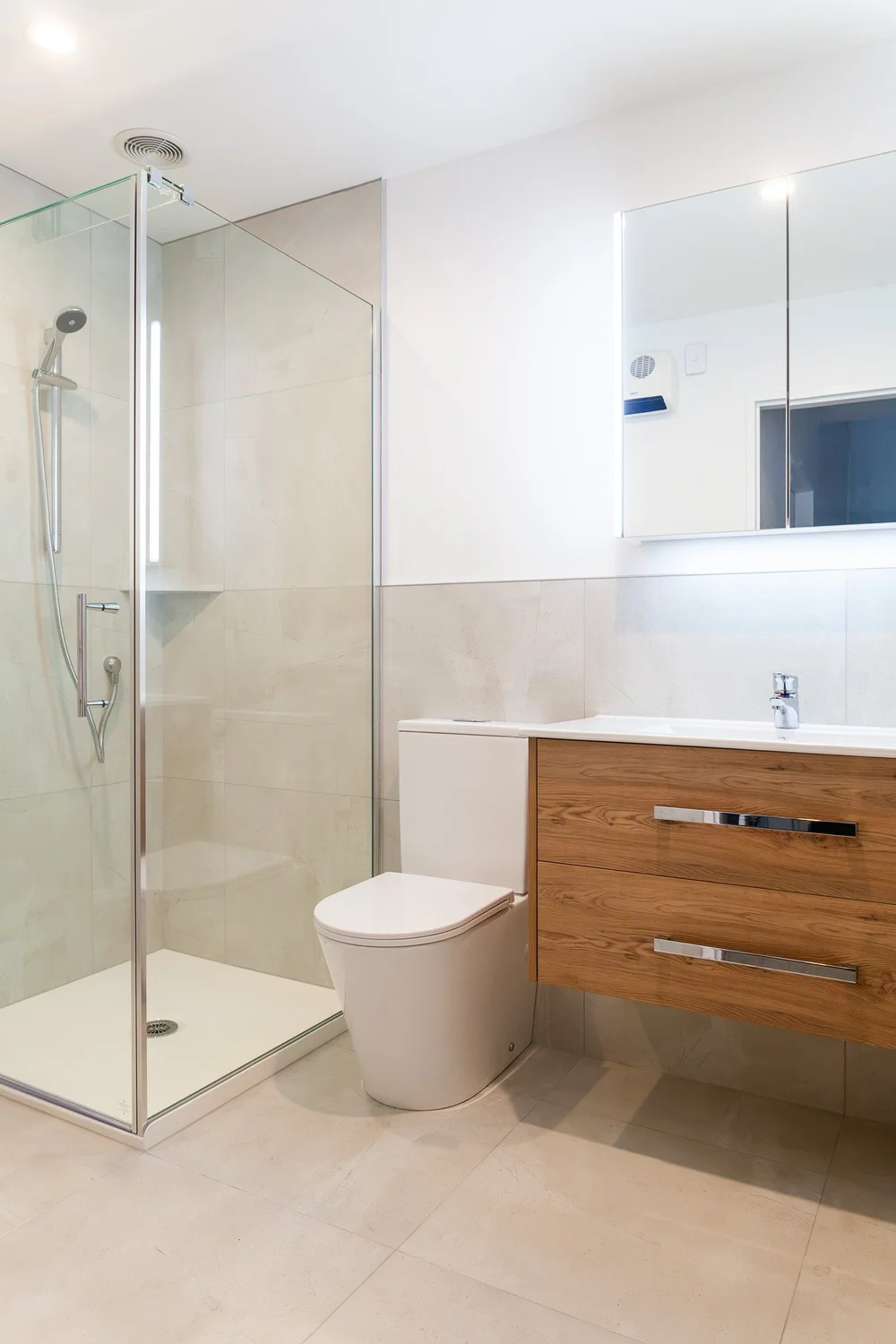
- Custom glass shower screen
- Heated towel rail, better tapware
High-End / Luxury
- Full layout redesign
- Premium tiles & feature walls
- Freestanding bath, underfloor heating
- Custom cabinetry & joinery
Estimates include labour, materials, demolition, waterproofing, fixtures and sub-trade coordination (plumbing, electrical). Final pricing is confirmed in a fixed-price quote after an on-site consultation.
What Each Part of Your Bathroom Costs
The biggest swings in price come from the products and finishes you choose, not the size of the room. Here's roughly what different options cost per item:
| Item | Budget Option | Premium Option |
|---|---|---|
| Shower | Acrylic liner shower — from $1,200 | Tiled, frameless glass shower — $4,000+ |
| Flooring | Vinyl — approx. $85/m² | Tiled with waterproof membrane — approx. $250/m² |
| Vanity | Standard floor-mounted vanity — from $600 | Wall-hung vanity with stone top — $2,000+ |
| Tapware | Standard chrome mixer — from $150 | Designer tapware & rain shower head — $600+ |
| Toilet | Standard close-coupled toilet — from $350 | Wall-faced toilet with concealed cistern — $1,200+ |
| Heating | Heated towel rail — from $250 | Towel rail + underfloor heating — $1,500+ |
Supply costs only — labour, waterproofing and installation are quoted as part of your fixed-price contract.
Complete Bathroom Renovation Service
Whether you need a full concept-to-completion renovation or a straightforward like-for-like refit, we manage the whole job under one fixed-price contract:
Design & Layout Planning
Working through fixture placement, storage and flow before pricing is finalised.
Sourcing Materials & Fixtures
Access to trusted local suppliers across budget through to premium ranges.
Project Management
One point of contact coordinating demolition, plumbing, electrical and tiling.
Licensed Trades
All work carried out or supervised by a Licensed Building Practitioner.
Consent Management
We handle council consent where structural or waterproofing changes require it.
Fixed-Price Contract
A clear, itemised quote before work begins — no surprises along the way.
What Affects the Cost of a Bathroom Renovation
Bathroom Size
Larger bathrooms require more materials, waterproofing, tiling and labour.
Layout Changes
Moving plumbing fixtures (toilet, shower, vanity) increases plumbing and building costs.
Materials & Finishes
Tiles, vanities, tapware and fixtures range from budget to premium, affecting total cost significantly.
Waterproofing & Compliance
Professional waterproofing and building compliance are essential and should never be compromised.
Access & Age of Home
Older homes and difficult-access sites can add cost through rot repairs, dated wiring or plumbing runs.
Labour & Trades
Quality workmanship from licensed builders, plumbers and electricians ensures durability and NZ Building Code compliance.
Typical Cost by Area
| Area | Typical Range | Notes | |
|---|---|---|---|
| Raumati & Raumati Beach | $20,000 – $70,000+ | Common in older weatherboard & brick-and-tile homes | Get a Quote → |
| Paraparaumu & Paraparaumu Beach | $20,000 – $70,000+ | Wide mix of home ages, our busiest area | Get a Quote → |
| Waikanae & Waikanae Beach | $20,000 – $70,000+ | Mix of inland & beachfront homes | Get a Quote → |
| Ōtaki & Ōtaki Beach | $20,000 – $70,000+ | Includes rural & lifestyle-block properties | Get a Quote → |
| Wellington, Porirua, Lower & Upper Hutt | $22,000 – $70,000+ | Site access & older housing stock can add cost | Get a Quote → |
How to Keep Your Bathroom Renovation on Budget
- Keep plumbing fixtures in the same position where possible
- Choose mid-range fittings for the best value and durability
- Use feature tiles in key areas instead of full wall tiling
- Plan storage early to avoid custom cabinetry costs later
- Allow a contingency for unforeseen issues such as rot or framing repairs
Bathroom Renovation Cost FAQs
How much does a bathroom renovation cost on the Kāpiti Coast?
A basic renovation keeping the existing layout with an acrylic shower liner starts around $20,000–$25,000. Mid-range renovations with full tiling typically run $35,000–$40,000, and high-end renovations range from $41,000–$70,000+, depending on size, layout changes and finishes.
How long does a bathroom renovation take?
Most bathrooms take 2–4 weeks depending on scope, drying times and sub-trade availability. Larger or structural jobs can take 4–6 weeks.
Do I need consent for a bathroom renovation?
Consent is usually not required for like-for-like refurbishment unless structural changes or significant plumbing and waterproofing membrane alterations are made. We can advise on your specific project.
Is the quote fixed, or can the price change during the job?
We provide a detailed fixed-price quote before work begins. Price only changes if you request additional scope, or if unforeseen issues (such as hidden rot) are found once demolition is underway — these are always discussed with you first.
Do your prices include GST?
Quotes are provided with GST clearly stated, in line with NZ requirements.
What flooring is best in a bathroom?
Vinyl offers the best combination of low cost and waterproofing and suits most budgets. Tiled flooring with a waterproof membrane costs more but is the most popular for durability and resale appeal. Both are good options — we'll help you weigh cost against look for your specific bathroom.
Should I keep the bath or go shower-only?
If it's the only bathroom in the house, keeping a bath is worth considering for resale — it can matter to buyers with young families. If you're staying long-term and prefer a bigger shower, a shower-only layout is a common and practical choice.
Wall-hung or floor-mounted vanity?
Wall-hung vanities are increasingly popular, especially in smaller bathrooms — they open up the floor, make the room feel larger and are easier to clean underneath. Floor-mounted vanities cost less and offer more built-in storage.
Should the toilet be separate from the shower and vanity?
Where layout allows, separating the toilet lets more than one person use the bathroom at once — useful for busy households and a good option to discuss during design if you're open to layout changes.
Get an Exact Price for Your Bathroom
Free on-site consultation. Fixed-price quotes. Licensed Building Practitioner.
Get a Free Quote