Kāpiti Coast & Wellington
Granny Flats &
Minor Dwellings
Specialists
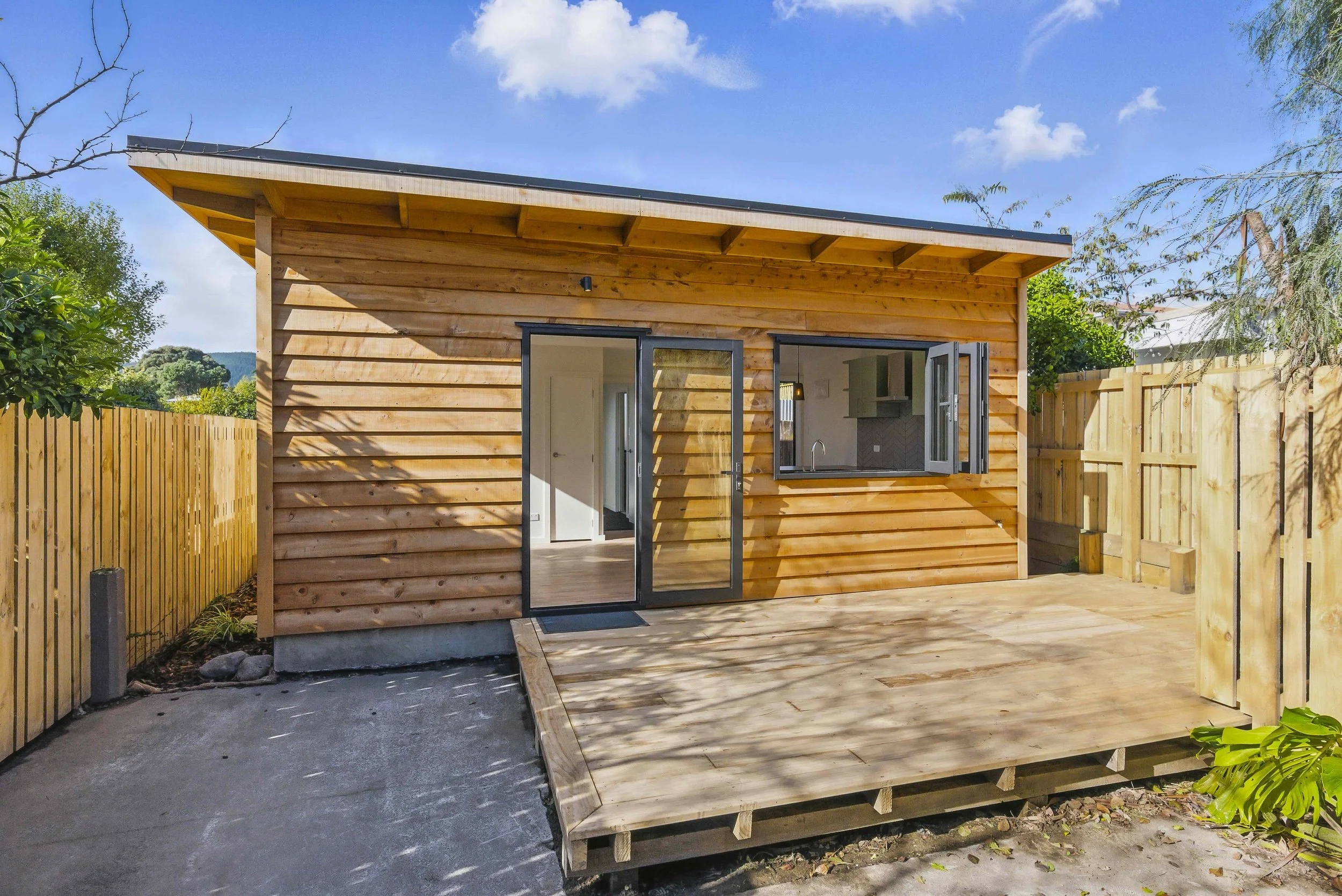
Build a self-contained minor dwelling on your property - up to 70m², with fewer inspections and faster approvals under new NZ building regulations. Licensed builders, fixed-price quotes.
Licensed Building Practitioner
All granny flat and minor dwelling work carried out by a Licensed Building Practitioner — fully compliant with NZ building standards.
Consent Exemption Experts
We know exactly which builds qualify for the 70m² consent exemption — and how to keep your project on the right side of the rules.
Full Documentation
We handle all Records of Work, completion documentation and compliance paperwork — so you're fully covered at every step.
Local Kāpiti Coast
Based in Raumati Beach, working across the Kāpiti Coast and Wellington. We know local council requirements inside out.
What's Changed in NZ
Build a Granny Flat Without Full Building Consent
The government introduced an exemption for standalone dwellings up to 70m² — allowing homeowners across the Kāpiti Coast and Wellington to build a secondary dwelling without going through the full building consent process, provided every exemption condition is met.
This opens the door for granny flats, rental income units, multi-generational living, home offices and downsizing solutions — at a significantly lower cost and with faster turnaround than a traditional consented build.
However, exemption does not mean no standards. The building must still comply with the NZ Building Code and be built or supervised by a Licensed Building Practitioner. Responsibility shifts from Council oversight to you and your builder — which means you need the right builder.
Get a Free QuoteThe Consent Exemption Rules
When You Don't Need Building Consent
To qualify for the consent exemption, your build must meet every single one of these conditions. Miss one rule and you're back into full consent — no exceptions.
Size
- Maximum 70m² floor area
- Includes any attached garage
- No flexibility — 70.1m² triggers consent
Height & Boundary
- Single storey only
- Floor level max 1m above ground
- Total height max 4m above floor level
- Minimum 2m from boundaries
- Minimum 2m from any other dwelling on site
Structure
- Must be fully detached
- Cannot connect to your main dwelling
- Lightweight timber or steel framing only
- Roof cladding max 20kg/m²
- Wall cladding max 220kg/m²
No Mezzanines or Lofts
- No mezzanine floors
- No loft conversions
- No solid fuel fires or wood burners
- No hazard-prone land (flood, slip, coastal)
Wellington and parts of the Kāpiti Coast have significant hazard-prone areas. We'll check your site before proceeding.
Not sure if your site and plans qualify? We'll check for you.
Check My Site →Common Mistakes
What You Definitely Can't Do
This is where homeowners get caught out. These are the most common pitfalls that push a project back into full building consent — and the cost and time delays that come with it.
Tiled Wet-Floor Shower
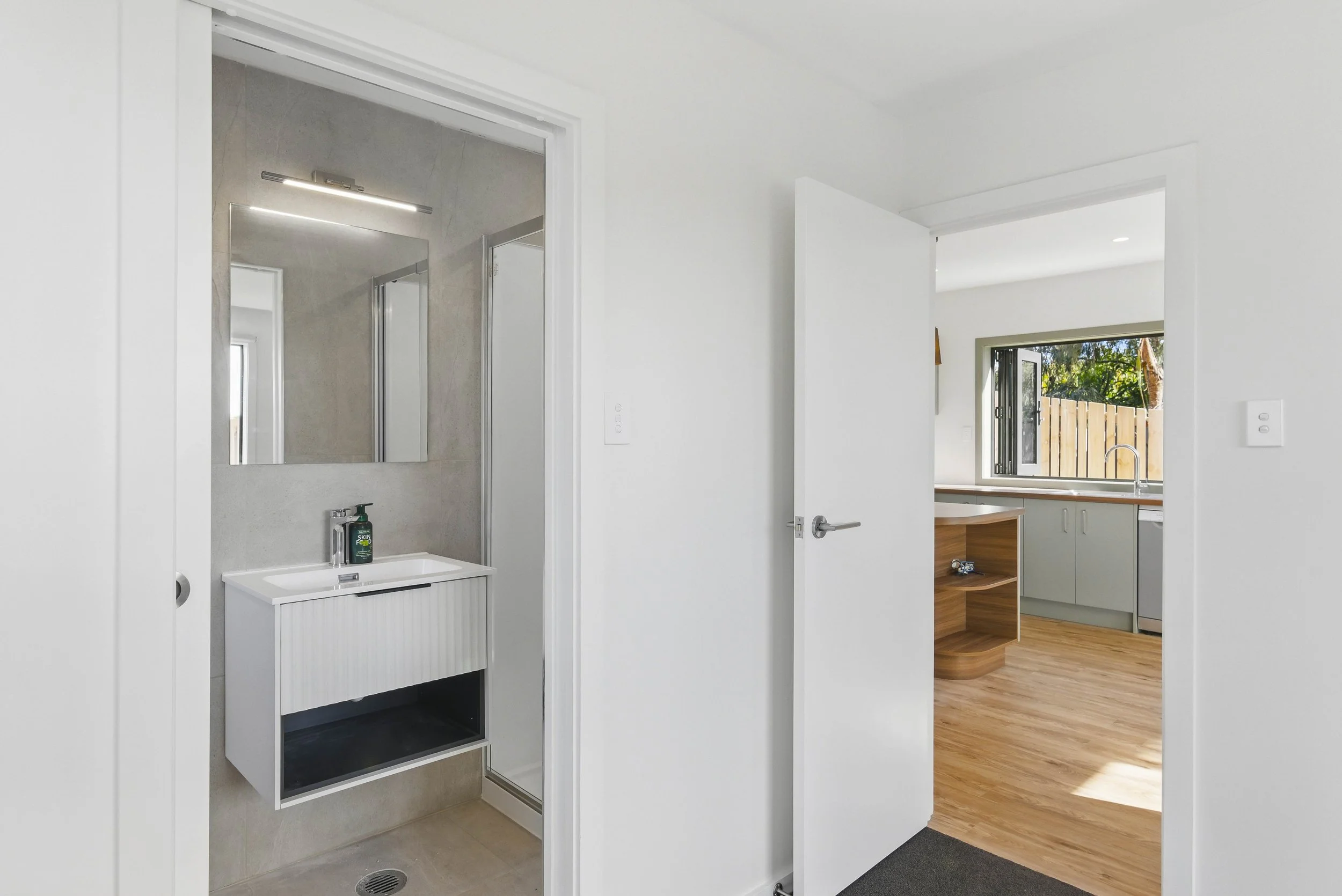
You must use a pre-fabricated shower unit. Custom tiled, level-entry showers typically require consent due to waterproofing risk. We can design a great bathroom within the rules.
Heavy Cladding or Roofing
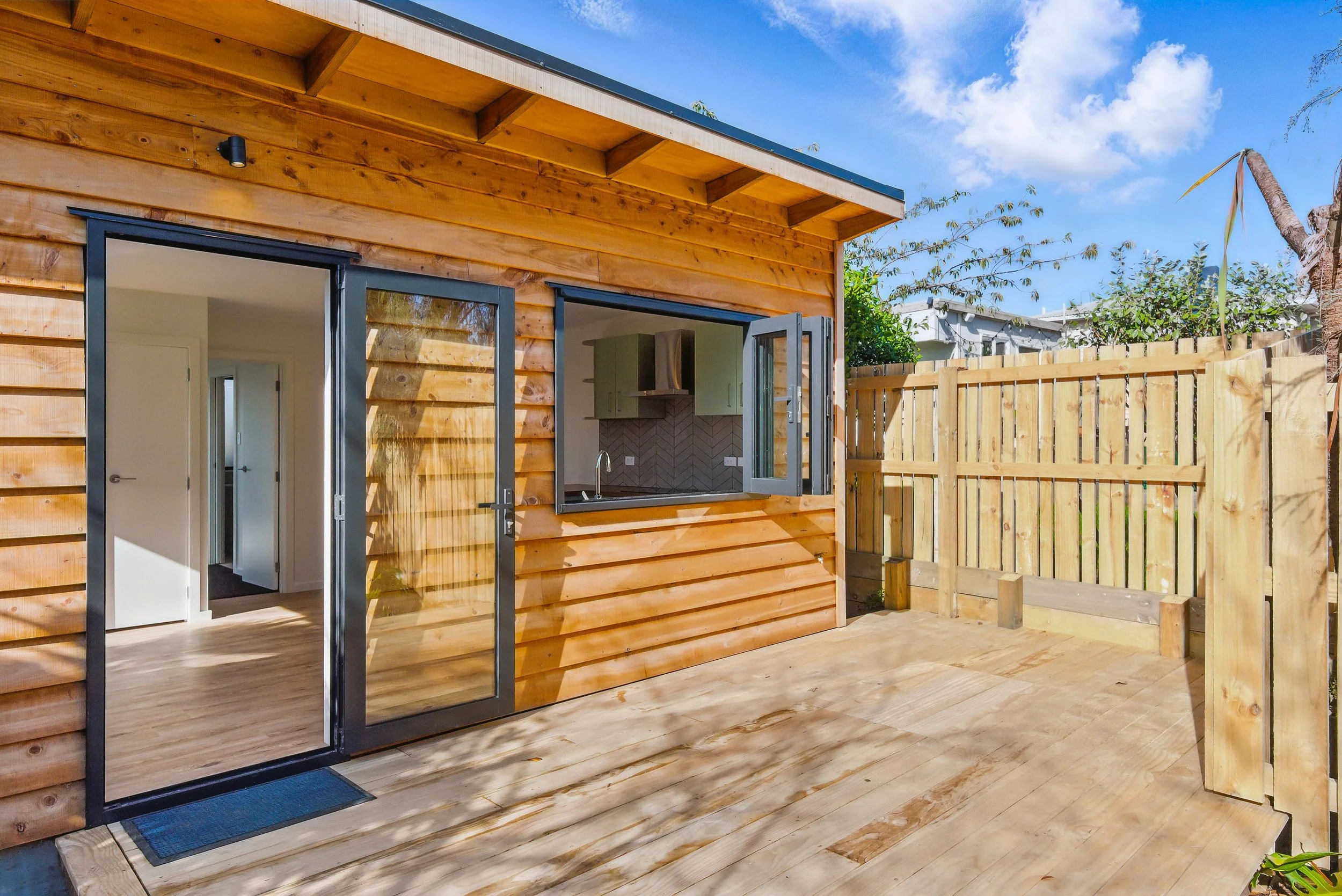
Concrete tiles and heavy masonry systems usually exceed the weight limits. Timber weatherboards and long-run metal roofing are the right materials for an exempt build.
Wood Burner or Solid Fuel Fire
Solid fuel fireplaces still require building consent. Electric heating and some gas options are acceptable alternatives that work well in a minor dwelling.
Hazard-Prone Land
If your property is subject to flooding, slip risk, coastal hazard or significant ground movement — you will likely require consent. This is a serious consideration across Wellington and parts of the Kāpiti Coast.
In many cases — yes. If your site has any hazard risks, if you want a tiled shower, or if you're planning to sell, a consented build gives buyers and banks more confidence. We'll help you weigh up the options honestly.
Documentation Required
The Paperwork You Still Need
Even without building consent, you are not avoiding documentation. An exempt build still requires specific paperwork — and we manage all of it for you.
Project Information Memorandum (PIM)
Before starting, you must apply to Council for a PIM. This identifies natural hazards, infrastructure constraints, planning restrictions and heritage overlays on your specific property. We help you through this process.
Records of Work
All Licensed Building Practitioners involved in the project must provide Records of Work upon completion — confirming all restricted building work was carried out to the NZ Building Code.
Trade Certifications
At completion you need: electrical safety certificates, plumbing and drainage compliance documentation, and gas certification if applicable. All coordinated and provided by Keen Builders.
Final Design Plans
Completed, accurate design plans must be filed at the end of the project. These form part of your property records and will be needed if you ever sell or refinance your property.
You cannot legally DIY restricted building work. Keen Builders manages all compliance documentation as part of every granny flat build — so you're fully covered and protected at settlement.
Our Work
Granny Flat Projects on the Kāpiti Coast
Ready to Build Your Granny Flat?
Serving Raumati, Paraparaumu, Waikanae, Wellington & surrounding areas. Free site assessment. Fixed-price quotes.